

Salesforce is a collection of Lego bricks
Why this photo of an over-the-top Lego creation?
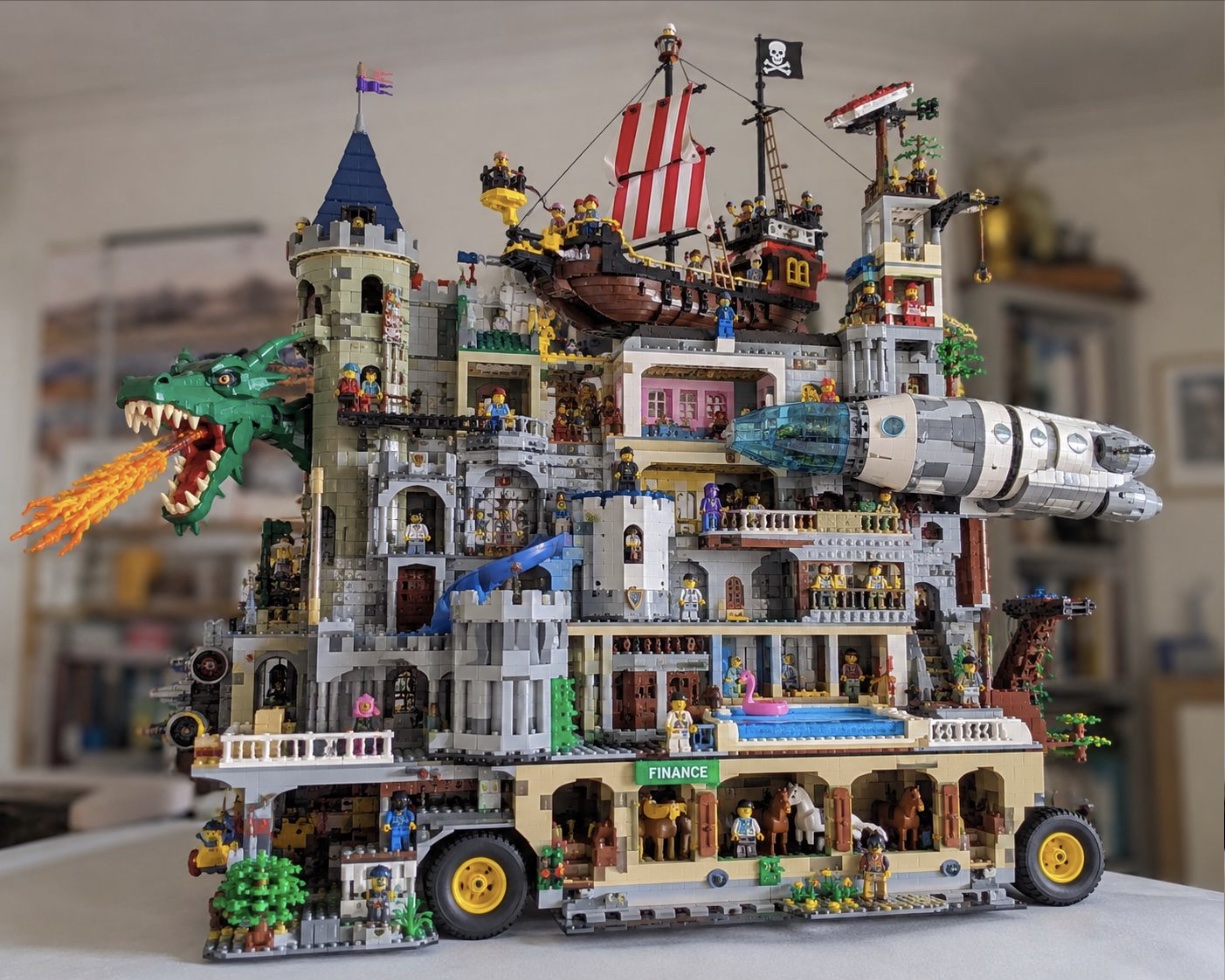
I once joined a project with no technical documentation and was told: “But you know how this system works. You know Salesforce.”
I was put on the spot. How do I explain to someone who hired me as an expert that knowing Salesforce doesn’t mean I automatically know how their Salesforce works? I don’t know their flows, validations or custom code without taking a look under the hood first.
This is how I explain it: Salesforce is a collection of Lego bricks. If you’ve been working with Salesforce for a while, you know the bricks and how they connect — but you don’t necessarily know what someone has built with them.
- 🏰 Maybe one company builds a castle.
- 🐉 Another builds a dragon.
- 💥 And maybe another started building a castle 10 years ago, turned one tower into a spaceship, added wheels, a swimming pool and a fire-breathing dragon head, then built three extra floors because someone in Finance needed somewhere to keep the horses — and nobody remembers why there’s a pirate ship attached to the roof. 🏴☠️
(Then Legal comes in and says the pirates aren’t compliant. ⚖️)
Then there are the special pieces: integrations, third-party apps, AI tools and external vendors. They can give your dragon an amazing custom head (which breathes real fire) — but you need to understand how that piece fits without making it impossible to add more bricks later (and without getting burnt).
And then there are the Lego minifigures: the roles that live in the world you’ve built, each with their own jobs, accessories and abilities. My kids love the Lego minifigures, and so do I. A castle is much more interesting when you fill it with mermaids and aliens.
I also find it fascinating to compare their Lego with the Lego I grew up with. Ours was simpler. You could more easily work out how the pieces fit together without instructions — but there were also fewer special pieces, fewer crazy minifigures and, arguably, a little less potential for absolute, total fantasy.
Today’s Lego pieces are more complex, but you can build much more interesting worlds with them.
And I think the same thing has been happening with SaaS — particularly Salesforce.
So what’s next for Lego, and could that help us predict what’s next for SaaS?
If you’re a Lego nerd like we are in our family, it’s worth thinking about the direction of Lego Smart Play. As Lego starts to change what its bricks can actually do, I can’t help wondering what analogy we’ll be able to make between that and the future of SaaS — and what we’ll need from our systems as a result.
But to summarise with something simpler:
Salesforce is like Lego bricks. You can build almost anything. The real skill is building something special without making it impossible to keep building.